Can You Become a Sports Agent Without Quitting Your Job?
October 21, 2026
by


Can You Become a Sports Agent Without Quitting Your Job?
Yes, you can begin building a career as a sports agent without leaving your current job. Many aspiring agents start by learning athlete representation, building industry relationships, and developing their knowledge of recruiting and contract negotiations while maintaining full-time employment. Becoming an agent takes time, and keeping your current income can provide financial stability while you prepare for opportunities in professional sports.
Can You Really Become a Sports Agent While Working Full-Time?
You can start preparing for a sports agent career while working full-time, and in some circumstances, you can continue both careers as your client base grows.
Becoming a sports agent does not necessarily mean quitting your job, moving across the country, or immediately opening your own agency.
In fact, maintaining your current career can be a practical way to enter athlete representation.
Many aspiring agents already have valuable professional skills in sales, business, marketing, finance, law, or relationship management. Those abilities can translate directly into the sports industry.
The challenge is learning how to apply them to athlete representation.
A successful sports agent needs more than a passion for sports. They need to understand contracts, recruiting, negotiation, marketing, and how to build lasting relationships with athletes.
The good news? You can begin developing those skills before making a full-time career change.
What Does a Sports Agent Actually Do?
A sports agent represents and advises athletes on professional opportunities, contracts, endorsements, and career decisions.
Depending on the sport and the agent's qualifications, responsibilities may include:
-
Identifying and evaluating prospective clients
-
Building relationships with athletes and their families
-
Negotiating playing contracts when properly certified or authorized
-
Pursuing sponsorships and endorsement opportunities
-
Advising athletes on career development and professional decisions
-
Coordinating with coaches, teams, attorneys, and other professionals
Some responsibilities can be handled remotely or outside traditional business hours. Others require immediate availability, travel, or meetings during the workday.
That is why starting part-time requires realistic expectations, careful planning, and a commitment to putting the athlete's interests first.
How Do You Become a Sports Agent Without Quitting Your Job?
The best way to become a sports agent while maintaining your current career is to develop your knowledge, choose a sport, build relationships, and pursue the appropriate professional qualifications before taking on clients.
Here are five practical steps.
Step 1: Choose the Sport You Want to Represent
Start by identifying the sport you know best or have the strongest connections within.
Whether your interests are in the NFL, NBA, MLB, NHL, soccer, or international sports, each industry has different rules and opportunities.
Understanding the market you want to enter will help you focus your time and resources.
Step 2: Learn the Business of Athlete Representation
Before representing athletes, develop a foundation in recruiting, contract negotiations, collective bargaining agreements, endorsement deals, and professional ethics.
Sports Management Worldwide offers an eight-week online Athlete Management course designed to introduce aspiring agents to these areas.
Step 3: Build Your Network
Relationships are central to athlete representation.
Begin connecting with coaches, scouts, athletic administrators, player development professionals, and experienced agents.
Professional networking, informational interviews, and industry events can help you better understand how athletes navigate their careers.
Any contact with prospective clients must comply with applicable league, player-association, college athletics, and state regulations.
Step 4: Develop Your Professional Skills
Use your available time to practice evaluating athletes, researching professional opportunities, studying contracts, and creating athlete marketing strategies.
If you work in sales, marketing, business development, or another relationship-driven profession, consider how your existing experience can support your future work in sports.
Step 5: Find Experienced Mentors
Learning from established sports agents can help you avoid common mistakes and better understand the responsibilities involved in representing athletes.
Mentorship can also provide insight into certification requirements, client relationships, and the realities of building a sports agency.
You do not need to leave your current job to begin these steps. You need a realistic plan and the discipline to follow it.
How Much Time Does It Take to Become a Part-Time Sports Agent?
There is no universal timeline for becoming a part-time sports agent because the process depends on your experience, professional relationships, certification requirements, and ability to attract clients.
Some aspiring agents spend months developing their knowledge and industry connections before pursuing their first client.
Others enter athlete representation with existing relationships from coaching, athletics, business, or another professional field.
If you're working full-time, consider setting aside time each week for education, professional networking, and researching athletes and opportunities.
Keep in mind that athlete representation can involve time-sensitive decisions. A player may need assistance with an offer, a contract deadline, or a career-changing opportunity during normal business hours.
Starting part-time is possible, but athletes still deserve reliable communication and professional service.
Before accepting clients, make sure you can meet those responsibilities without violating your employer's outside-work policies or creating conflicts of interest.
How SMWW Helps Working Professionals Become Sports Agents
Sports Management Worldwide's Athlete Management course is designed to help aspiring sports agents develop industry knowledge through flexible online education and direct interaction with experienced professionals.
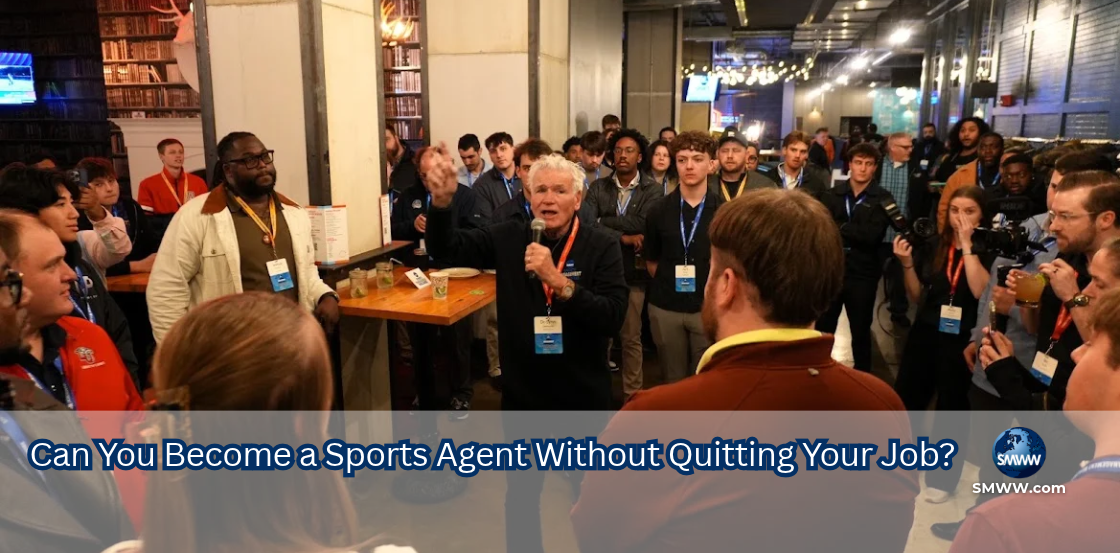
The eight-week course features Dr. Lynn Lashbrook, SMWW President and Founder and NFLPA-certified agent, alongside Joel Corry, former NFL and NBA agent and CBS Sports' Agent's Take analyst.
Students learn about:
-
Athlete recruiting and client relationships
-
Contract negotiations and collective bargaining agreements
-
Endorsements, sponsorships, and athlete marketing
-
Legal and ethical responsibilities
-
Draft preparation and professional opportunities
-
Building and operating a sports agency
The course includes weekly interactive Zoom sessions, online assignments, and recorded discussions for students who cannot attend live.
This structure makes it possible for working professionals to pursue specialized sports agent education without immediately leaving their existing careers.
Learn More About SMWW's Athlete Management Course
What Is the SMWW Agent Advisor Program?
SMWW's Agent Advisor Program provides eligible graduates an opportunity to pursue athlete representation alongside experienced agents through SMWW Agency.
Following the Athlete Management course, graduates can explore becoming Agent Advisors and developing their own relationships with prospective professional athletes.
Depending on the arrangement, Agent Advisors may receive access to agency resources, scouting information, marketing materials, mentorship, and opportunities to participate in client representation with appropriately certified agents.
They may also be eligible to share in agency fees generated through athletes they help recruit, subject to their agreements and applicable regulations.
Importantly, SMWW encourages aspiring Agent Advisors to maintain their current careers while gradually building their clientele.
This approach gives individuals an opportunity to gain experience without depending immediately on income from athlete representation.
Agent Advisor participation is separate from league certification and does not authorize activities reserved for licensed or certified agents. Program eligibility, fees, responsibilities, and compensation depend on the applicable agreement.
For someone looking to transition into sports, the combination of education, mentorship, and a potential agency relationship can provide a structured starting point.
When Should You Consider Becoming a Full-Time Sports Agent?
Consider transitioning into full-time athlete representation when your responsibilities, client relationships, and financial position make the move sustainable.
That decision should not be based simply on completing a course or meeting your first prospective client.
Before leaving your current job, evaluate whether you have a dependable client base, sufficient financial reserves, the appropriate professional credentials, and enough potential business to justify the transition.
Sports agent income is not guaranteed. Building relationships and securing paying clients can take time, and agent fees are subject to agreements and applicable regulations.
Keeping your current career while establishing yourself in sports can give you the flexibility to build the right foundation instead of rushing the process.
Start Building Your Sports Agent Career Today
You do not have to choose between financial stability and pursuing a career in sports.
For aspiring agents, the first step may be learning how athlete representation works, meeting industry professionals, and developing the skills needed to support athletes.
Over time, those efforts can create opportunities to participate in athlete management and potentially transition into a larger role.
At Sports Management Worldwide, the goal is to help people turn their passion for sports into professional opportunities.
With online education, experienced mentors, and potential opportunities through SMWW Agency, aspiring agents can begin preparing for their future while continuing to work in their current profession.
You don't have to quit your job to start pursuing your dream of becoming a sports agent.
Explore SMWW's Athlete Management Course
Frequently Asked Questions
Can you be a sports agent part-time?
Yes, you can work toward a sports agent career part-time and, where permitted, represent athletes while maintaining another job. However, you must comply with league regulations, licensing requirements, employer policies, and your responsibilities to clients.
Do you need a law degree to become a sports agent?
No, a law degree is not universally required to become a sports agent. However, some leagues have specific educational requirements. For example, NFLPA certification generally requires undergraduate and postgraduate degrees or a qualifying negotiating-experience exception.
Can you become a sports agent with no experience?
Yes, you can begin preparing for a sports agent career without previous athlete representation experience. Education, mentorship, networking, and practical industry knowledge can help you build a foundation before pursuing clients.
How do sports agents make money?
Sports agents commonly earn income through negotiated representation fees or commissions, subject to league rules and client agreements. Some agents also work on endorsement and marketing arrangements. Income varies, and finding a client does not guarantee payment.
Can you take SMWW's Athlete Management course while working full-time?
Yes, SMWW's Athlete Management course is delivered online over eight weeks and is designed to accommodate working professionals. Students participate in weekly Zoom sessions, and recordings are available for those unable to attend live. Completing the course provides an SMWW educational certificate, not automatic league-agent certification.
Can SMWW Agent Advisors keep their current jobs?
Yes, SMWW encourages aspiring Agent Advisors to maintain their existing careers while building their athlete representation businesses. Participation and permitted activities remain subject to agency agreements, league regulations, and other applicable requirements.