MLB Playoffs Return to NBC: Sports Broadcasting Careers
October 01, 2026
by


MLB Playoffs Return to NBC: Inside the Careers Behind the Broadcast
October baseball is here, and one of the biggest stories surrounding the 2026 MLB Postseason is happening beyond the field.
The MLB Wild Card Series marks the return of postseason baseball to NBC for the first time since the 2000 American League Championship Series. NBC, Peacock and NBC Sports Network are carrying the Wild Card round as part of NBCUniversal's new MLB media partnership.
Tonight, the Philadelphia Phillies and Atlanta Braves meet in a winner-take-all Game 3 on NBC and Peacock.
Millions of fans will focus on what happens between the lines.
But every postseason broadcast also highlights another side of professional sports: the people whose careers are built around telling the story of the game.
What Careers Are Behind an MLB Playoff Broadcast?
A Major League Baseball broadcast requires much more than a play-by-play announcer.
Modern sports coverage can involve professionals working in:
-
Play-by-play broadcasting
-
Color commentary
-
Sideline and field reporting
-
Broadcast production
-
Research and statistics
-
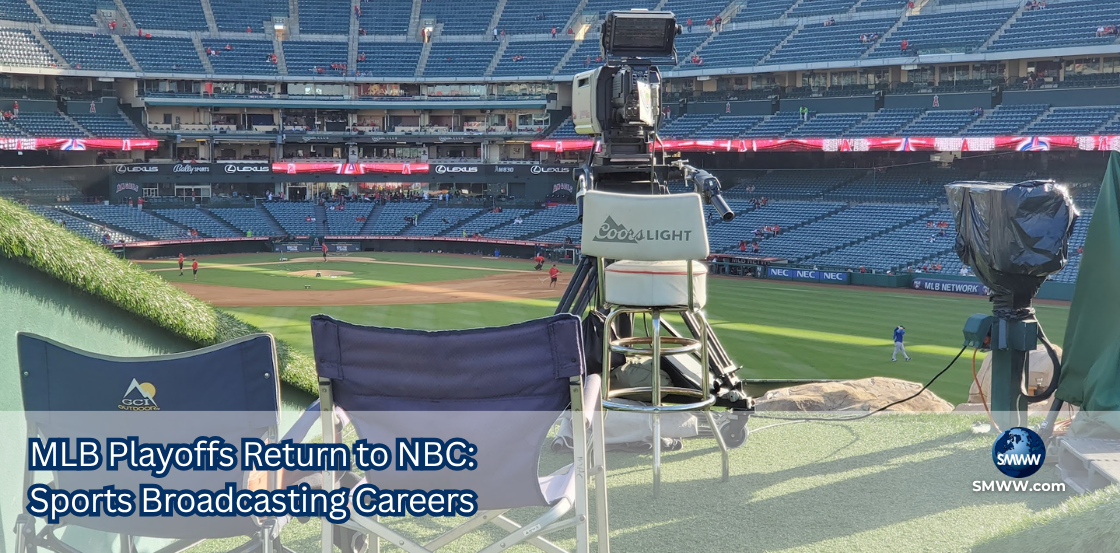
Camera operations
-
Audio production
-
Replay
-
Graphics
-
Digital media
-
Social media
-
Video production
-
Studio programming
-
Content strategy
Some of those professionals appear on camera. Many never do.
Sports broadcasting is an entire team working to turn a live sporting event into a story millions of people can follow.
Sports Broadcasting Is Becoming a Multiplatform Career
The return of MLB postseason baseball to NBC also demonstrates how much sports media has changed.
A major game is no longer produced exclusively for traditional television.
Fans can follow games through broadcast television, streaming platforms, social media, mobile devices, digital highlights, studio shows and short-form content.
That creates opportunities for professionals who understand more than one form of media.
A broadcaster may also create digital content. A producer may help develop social clips. A reporter may appear on television, publish online and create content for social platforms.
The future of sports media belongs to professionals who can tell compelling sports stories wherever fans are watching.
Former Players Are Becoming Part of Sports Media
The 2026 MLB Wild Card coverage also demonstrates another growing part of sports broadcasting: former athletes translating their playing experience into media careers.
NBC's Wild Card coverage includes former MLB players providing analysis and explaining what hitters and pitchers are thinking during critical moments.
That expertise gives viewers something they cannot get from simply watching the play.
It also demonstrates that sports careers can evolve.
Playing, coaching, scouting or working inside a sport can provide knowledge that later becomes valuable in broadcasting, analysis and content creation.
How Do You Start a Career in Sports Broadcasting?
Breaking into sports broadcasting requires more than knowing sports.
Aspiring broadcasters need to learn how to communicate what they know.
That can include developing skills in:
-
Play-by-play
-
Interviewing
-
Sports reporting
-
On-camera presentation
-
Commentary
-
Storytelling
-
Research
-
Audio and video production
-
Digital content
Practice is also critical.
Calling games, interviewing athletes and coaches, recording podcasts, producing social videos and building a demo reel can help aspiring broadcasters develop experience they can show potential employers.
Knowing sports gives you something to talk about. Learning how to communicate sports gives you a professional skill.
Learn Sports Broadcasting with SMWW
Sports Management Worldwide's Sports Broadcasting Course is designed for people who want to develop professional sportscasting skills.
Students learn areas such as play-by-play, interviewing, sports reporting and developing an on-air presence while learning from professionals with experience in the sports media industry.
Explore SMWW Sports Broadcasting
For people more interested in the content and digital side of sports media, SMWW also offers Sports Media & Content Strategy.
The course focuses on areas including digital media, content strategy, communications, social media and storytelling within professional sports.
Explore SMWW Sports Media & Content Strategy
The MLB Playoffs Show How Big Sports Media Has Become
When the Phillies and Braves take the field tonight, fans will see nine players on each roster competing at any given moment.
What they may not see is the much larger team working behind the scenes.
Broadcasters explain the action. Producers determine how the story is presented. Camera operators capture it. Researchers provide information. Graphics teams visualize statistics. Digital teams distribute highlights. Social teams create conversations around the game.
And streaming platforms are creating even more ways for fans to experience sports.
That means the growth of sports media isn't only changing how we watch baseball.
It's creating different ways to work in it.
Millions of people will watch the MLB Playoffs this October.
If your goal is a career in sports, start watching something else too:
Who is making the broadcast possible?
Because your future career in baseball may not be on the field.
It could be behind the microphone, behind the camera or behind the content millions of fans consume every day.
Don't just watch October baseball. Learn how to become part of the team bringing it to the world.
--
Frequently Asked Questions About Sports Broadcasting Careers
How do you get a job in sports broadcasting?
Start by developing practical skills in play-by-play, reporting, interviewing, production or digital media. Aspiring broadcasters should also create examples of their work, gain experience covering live sports and build relationships with professionals in the sports media industry.
Do you need to be a former athlete to become a sports broadcaster?
No. Many successful sports broadcasters did not play professionally. Strong knowledge of the sport, communication skills, preparation, storytelling ability and broadcasting experience can all help someone build a career in sports media.
What jobs are available in sports broadcasting besides announcer?
Sports broadcasts require producers, reporters, researchers, camera operators, audio professionals, replay operators, graphics teams, video editors, digital producers, social media professionals and other production personnel in addition to play-by-play announcers and analysts.
Is sports broadcasting still a good career with streaming becoming more popular?
Streaming is expanding where sports content is distributed rather than eliminating the need for sports media professionals. Television, streaming, social media, podcasts and digital platforms all need professionals capable of producing and communicating sports content.
How can I practice sports broadcasting?
Aspiring broadcasters can practice by calling live or recorded games, creating podcasts, interviewing athletes and coaches, producing sports videos and covering local or college teams. Building a portfolio or demo reel gives potential employers examples of your abilities.
What does SMWW's Sports Broadcasting Course teach?
SMWW's Sports Broadcasting Course helps students develop skills such as play-by-play, interviewing, sports reporting and on-air presentation while learning about the professional sports broadcasting industry.