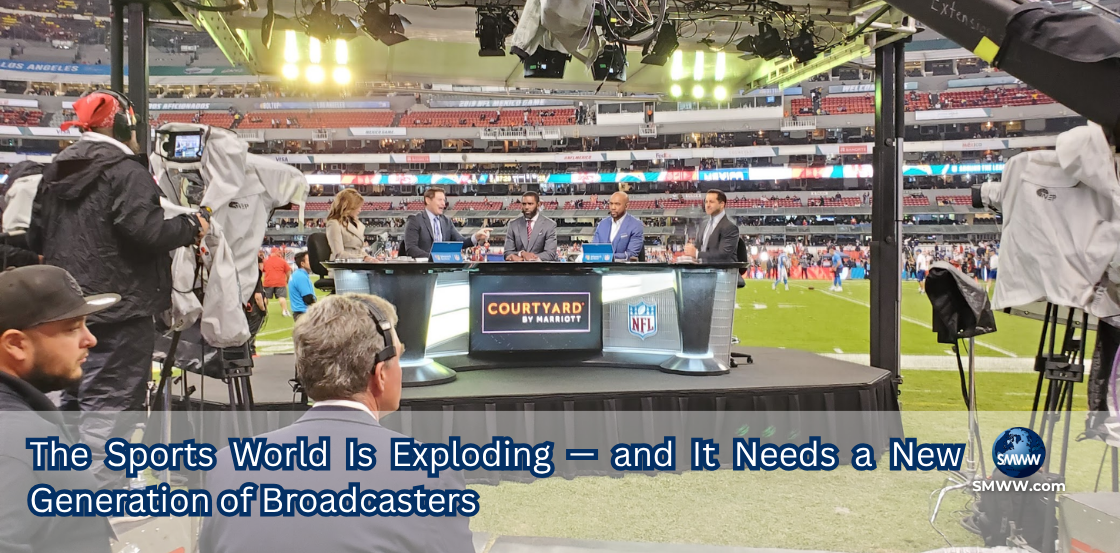
The NFL Just Conquered Australia: What the First NFL Game in Melbourne Means for the Future of Sports Careers
September 15, 2026
by


Quick take: On September 11, 2026, the NFL played its first-ever regular-season game in Australia. The San Francisco 49ers beat the Los Angeles Rams 27-7 at a packed Melbourne Cricket Ground. But the score wasn't the story. The story was a city falling in love with a sport it barely knew — and a global market announcing, loudly, that it's ready for the NFL. I was on the ground for all of it. Here's what it means for where sports is headed.
Melbourne Is The Sporting Capital Of Australia — And It Showed
Start with the setting, because it's everything. The Melbourne Cricket Ground is one of the great stadiums on earth: a 100,000-seat cathedral in a city that lives and breathes sport. At 10:30 on a Friday morning, it was packed to the gills for a game that had never once been played on Australian soil.
Sit with that. For most Australians, watching the NFL means a 3 a.m. alarm on a Monday. They might catch the Super Bowl if they're lucky. So the appetite that filled the MCG on a weekday morning wasn't casual — it was pent-up demand finally getting an outlet.
And nobody does a crowd quite like an Australian crowd. This one didn't just show up — it turned a foreign sport into a full-blown home-crowd party. When "The Horses" came over the speakers, the whole stadium sang it back, and when "Sweet Caroline" hit, 100,021 people belted the "bah, bah, bah" at a volume you could feel in your chest. It didn't matter that most of them had never watched a full NFL game in their lives. Melbourne came to have fun, and it brought the energy that's made it the sporting capital of Australia — the same city that hosts the Australian Open, the Melbourne Cup, and an AFL Grand Final that stops the nation.
What made it special was watching a crowd learn the game in real time. There was no reflexive roar on third down, no groan when a drive stalled — the reflexes that a lifelong fan doesn't even think about simply weren't there yet. Instead you got something more honest: genuine oohs and aahs at the big plays, the sound of tens of thousands of people discovering football as it happened in front of them. It was raw and it was contagious, and it reminded you what it must have felt like to watch this sport for the very first time.
Then came the moment I'll remember longest. After the coin toss, the whole stadium pulled off a card stunt — a colored sheet of paper taped to every single seat, held up in perfect unison. Seventy thousand strangers, most of them new to the game, moving as one. The photos were unreal. That image, not the final score, is what Melbourne will carry with it.
Give the NFL real credit here, too, because they didn't assume the crowd already knew the game — they taught the room to watch. Pregame explainer videos broke down the positions and what each role actually does. When a penalty was called, the infraction was explained on the big screens as the referee announced it. That's a league that understands a simple truth about a new market: education is marketing. You don't grow fans by talking over their heads. You grow them by inviting them in.
The Real Winner Wasn't On The Scoreboard
The 49ers won 27-7. But the bigger victory was off the field, and it belonged to the away team.
The Niners treated this like the opportunity it was. They flew in a full week early, acclimated their players, got in front of the Australian media, and activated their brand across the city. The Rams arrived roughly 28 hours before kickoff. The blowout on the field mirrored the blowout in preparation. Flying in a week ahead didn't just help San Francisco win a game — it helped them win a country, creating 49ers fans for life in a market with no prior allegiance. When you're the first NFL team someone ever falls for, that bond can last decades.
If I'm the Rams — the designated home team here — I'm rethinking the entire playbook for next year. You can't half-commit to a new market and expect to own it. I'd bet they change their approach in 2027.
Melbourne Became An NFL City For A Week
The 49ers weren't the only club that understood the assignment. Two miles from the MCG, the Seattle Seahawks ran one of the smartest plays of the whole trip—and they weren't even in the game.
Seattle took over Melbourne's historic Imperial Pub and threw an opening-night watch party on Thursday morning Australia time, timed to their own NFL Kickoff clash with New England back in the States. More than 200 people lined up outside just to get in the door. Let that sink in: hundreds of Australians queuing on a weekday morning to watch a team that wasn't even playing on their continent. That's not a franchise showing up for a game — that's a franchise planting a flag in a market it clearly wants a piece of. Don't be surprised if Seattle is the one playing down here next year.
And the NFL itself put on a clinic in citywide branding. Signage draped the city. The iconic Flinders Street Station — one of the most photographed buildings in Australia — was lit up with NFL logos. A pop-up store did, by my estimate, a few million dollars in sales across the week, anchored by two genuinely clever local collaborations that tell very different stories:
- The AFL X NFL Guernsey line reimagined NFL teams as Aussie Rules guernseys — the classic sleeveless footy jumper, NFL identity in an unmistakably Australian silhouette.
- The Football x Football line reimagined NFL teams as soccer-style kits — the same clubs rendered in the language of the world's game.
Two different codes, two different design languages, both saying the same thing: the pie is big enough for everyone. That's not merchandise. That's strategy — leagues reading the same room and deciding to grow the market together instead of fighting over it.
Why This Matters: The NFL Sees a Global Market For The Taking
Zoom out from the jerseys and the pub takeovers, and a bigger picture comes into focus — the part of this story that outlasts any single game.
The NFL isn't dabbling internationally anymore — it's committing. Super Bowl viewership abroad is up around 10%, and the league wants that number to climb. Commissioner Roger Goodell has floated reaching 16 international games within roughly five years and is openly discussing an 18-game regular season partly to create the inventory to feed that demand, with Australia and the Asia-Pacific region squarely in the crosshairs.
The demand signal in Melbourne backed it up. Here's the stat that stopped me cold: roughly 51% of tickets were sold outside the state of Victoria. More than half the crowd traveled to be there. People want to travel and people want to watch the NFL — this game blended both into a single proof point. That's sports tourism and fandom converging, exactly the data that turns a one-off into an annual fixture. My honest read: the NFL has a product that translates globally, and the global market is ready to receive it. Melbourne wasn't an experiment. It was a beachhead.
What Global Expansion Means For Your Career In Sports
This is the part I care about most. Every time a league goes global, it creates an ecosystem of jobs that didn't exist in that market the day before — brand activations, media relations, the pub takeovers, ticketing, sponsorship, community, digital, analytics, and the local talent pipeline to fill all of it. The globalization of sport is one of the biggest career-opportunity engines of the next decade, and the people who position themselves now — with the right education and network — are the ones in the room when the next market opens.
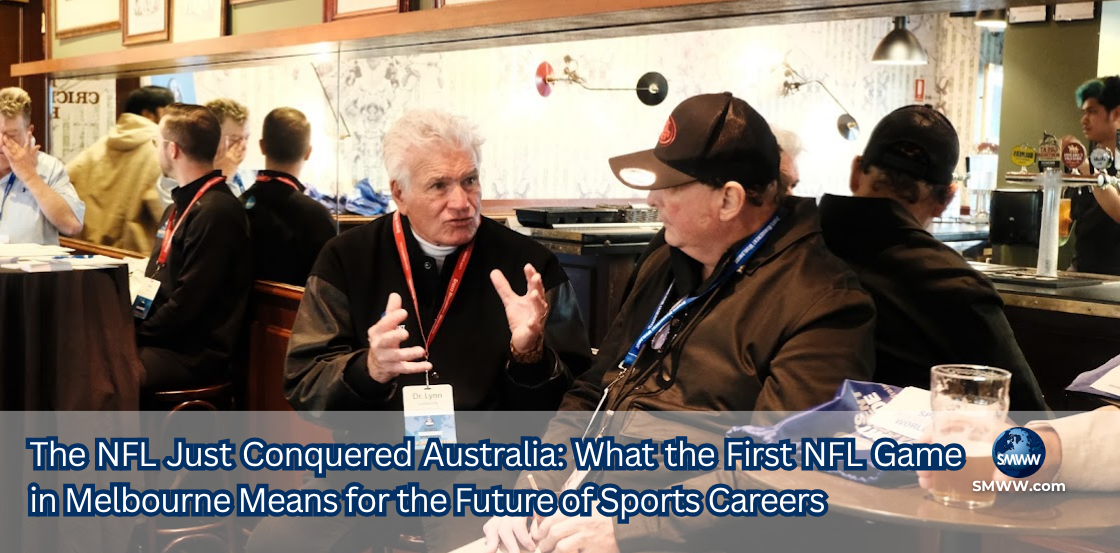
We saw that play out at our own event. Our Melbourne meet & greet drew more than 70 people, including dozens of sports executives — among them Brian Hampton, Assistant GM of the San Francisco 49ers. People stayed for hours after we wrapped, trading cards, making connections, and learning how to break into the sports industry through SMWW's sports management courses, conferences, and degree programs. The energy told the same story the stadium did: there's enormous, largely untapped global demand to work in sports, not just watch it. We were asked back next year before we'd even left. We'll be there.
The Bottom Line
The first NFL game in Australia was a masterclass in going global — the 49ers' week-early commitment, the Seahawks' pub takeover, a crowd singing "Sweet Caroline" at a sport it's still learning, and fans who traveled from across the country to witness history. The 49ers won 27-7, but the bigger win belongs to the sport itself and to everyone building a career around it.
If watching Melbourne fall for the NFL made you think about your own place in the global sports industry, that's the right instinct. The game is going worldwide, the opportunities are following it, and the next Melbourne is already out there waiting. The only question is whether you'll be ready when it opens.
Want to build a career in the global sports industry? Explore SMWW's sports management courses, conferences, and degree programs and connect with the people already in the room.
Frequently Asked Questions
When was the first NFL game in Australia? The first-ever NFL regular-season game in Australia was played on September 11, 2026, at the Melbourne Cricket Ground (MCG).
Who played in the first NFL game in Melbourne, and who won? The San Francisco 49ers played the Los Angeles Rams. The 49ers won 27-7.
Where was the NFL Australia game held? At the Melbourne Cricket Ground (MCG), a roughly 100,000-seat stadium and one of the most famous sporting venues in the world.
Why did the 49ers dominate the Rams in Melbourne? On the field it was a 27-7 win, but preparation told the story: the 49ers flew to Australia a full week early to acclimate and activate their brand, while the Rams arrived roughly 28 hours before kickoff.
Is the NFL expanding internationally? Yes. The NFL has set a goal of reaching 16 international games within about five years and is discussing an 18-game regular season to support that growth, with Australia and the Asia-Pacific region as key target markets. International Super Bowl viewership is up roughly 10%.
Will the NFL come back to Australia? The strong demand — including that roughly 51% of tickets were sold to fans outside the state of Victoria — makes Australia a strong candidate to become a recurring destination on the NFL's international schedule.
How do you get a career in the global sports industry? Education and networking are the two levers. Programs like SMWW's sports management certificate courses, degree partnerships, and industry conferences are designed to help people break in and connect with executives already working in the field.